While washing up yesterday evening, I had some music playing in the kitchen and somehow found myself reminscing with my eldest daughter about the “Community” TV series that we were somewhat addicted to about ten years ago. I asked Alexa (who is ever-present throughout our house) if we could listen to “The Way It Is” from the Community soundtrack album – a comedy cover from the show of the famous Bruce Hornsby record from the 1980s.
It was then that I realised my daughter had never heard the original – so she had never understood why it was so funny when Chevy Chase’s character “wrote it” in the show.
You can thank me for planting the “The Way It Is” ear-worm later – I’m going to be humming it all day now, and so will you.
Anyway (and this leads to the biggest segway ever).
Having handed my notice in at work last week, and starting to slowly step away, I’ve started to get a bit of perspective about everything going on around me. I thought I might share a few thoughts.
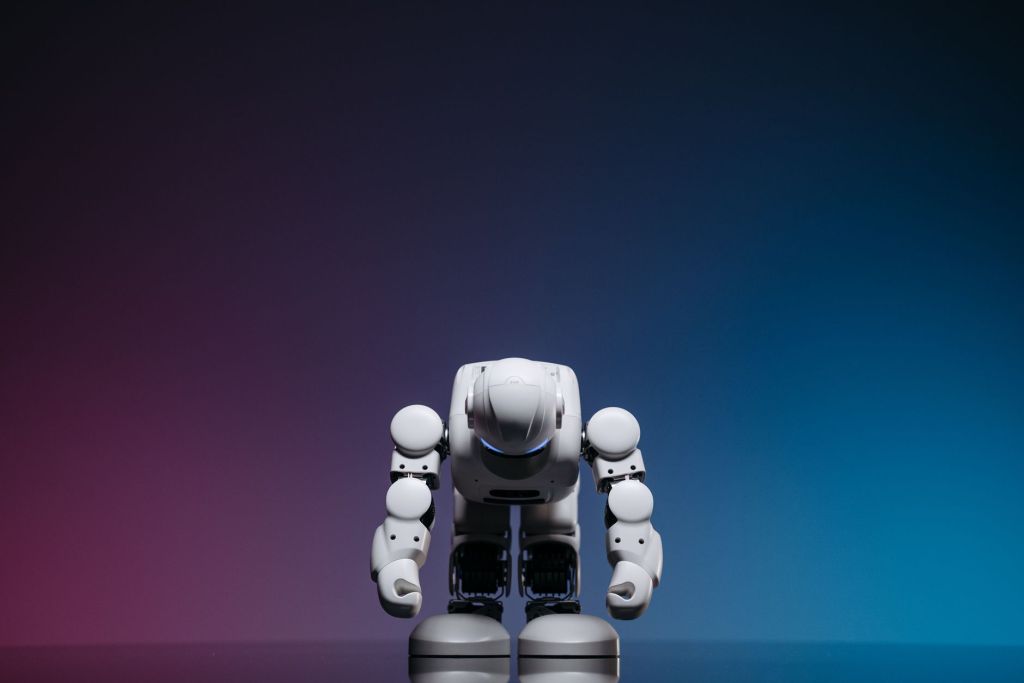
The thing I have been employed to do for the last thirty years – software development -is arguably the first skill, or trade to be replaced by “AI”. In much the same way that craftsmen became the first tool makers, and then tool makers built machines that replaced the craftsmen – the same thing has happened to software development.
You might say software and hardware engineers have sawn through the legs of the chair they were standing on (the famous “I’ll teach me” moment). Some might be horrified about this happening. Strangely, I’m not.
Everything changes.
For the last thirty years I have been one of the unseen army that could take a requirement and invent a system to deliver that requirement. It could take days, weeks, or even months – and would rely on years of knowledge and experience not just from me, but from a community of experts around me.
That world has gone.
All you need for the majority of applications or systems now is the ability to express your requirements clearly – the machinery of the internet, now armed with an eidetic memory of everything in the public domain done previously, can build and deploy pretty much anything you dream up within hours or days.
The question isn’t so much “how you might do something” any more – rather “what would you like to do”.
There’s a lot of fear, uncertainty, and doubt being pedalled by both the artistic and creative communities about AI – and it’s being recycled by journalists that seem to love projecting every fictional dystophia they can imagine – because shock and horror creates traffic, and makes money.
While it’s true that the world is changing, once you understand the nature of AI – how it actually works at a nuts and bolts level – that it is not inherently intelligent – you realise this is no different than the industrial revolution largely replacing craftsmen with factories.
There are all sorts of outcomes being projected by soap box keyboard warriors – spreading fear, uncertainty and doubt – feeding all manner of attention grabbing narratives based on movies, TV shows, and occasionally books.
I think it will be interesting to see how the next few years unfold – how we deal with the moral, ethical, and legal implications of “AI” – or rather (and this is perhaps a better way to think of it) – the result of building machines that can process information at previously unimaginable speeds – because that’s what’s really going on.
I watched a video a few days ago where an ex-Microsoft engineer demonstrated a computer disassembling a piece of previously commercial software (without the source code), and having the computer make sense of the code, re-write it in another language, and re-compile it into an almost exact facsimile of the original piece of software. It wasn’t intelligent. It just worked the problem – at a speed and scale we struggle to comprehend.
I suppose books are a good analogy. If you take a novel, replace the characters, locations, and situations, but essentially tell the same story, have you copied the original? Because if you have, then all stories that broadly fit within the “seven great stories” trope are copies of each other in some way.
Maybe all of these struggles are the result of an epoch where we claimed ownership over thoughts and ideas – and assigned material value to them. Maybe the changing world will force us to re-evaluate many of the materialist, capitalist values the “modern world” is built upon.


Leave a Reply